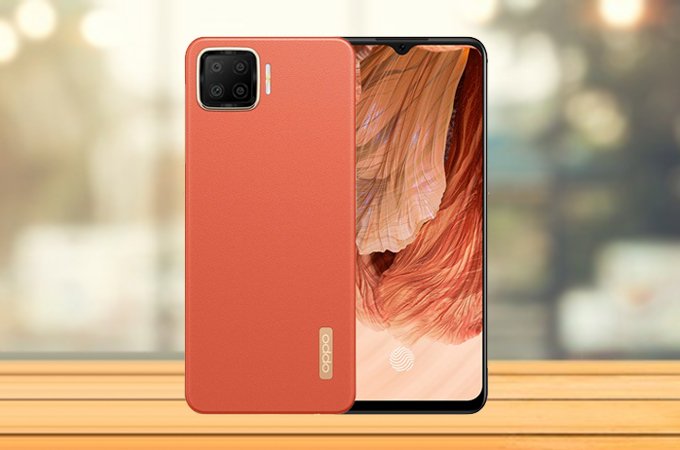
Here’s good news if you are planning to buy smartphone because Oppo has reduced the price of its four smartphones.
The price of the smartphones which has been reduced in are Oppo F17, Oppo A15, Oppo A12 and Oppo Reno 3 Pro. The company has reduced the price of smartphones from the budget to its mid-range by Rs 2000.
All these mobiles have been listed on Amazon and Flipkart with a new price. Here’s the detailed information about the price of which smartphone of Oppo brand has been reduced.
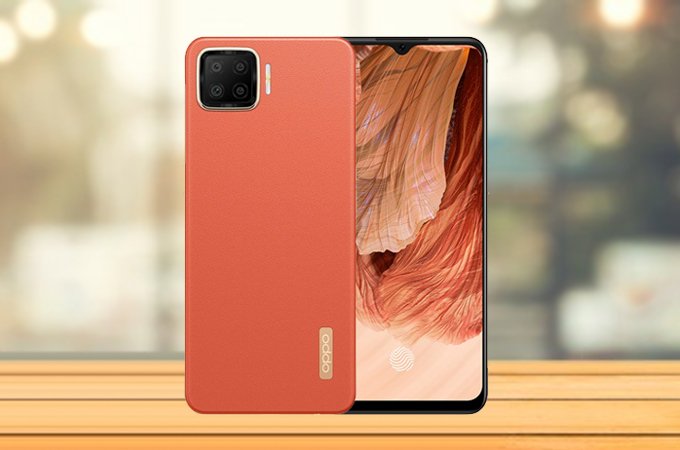
Oppo F17 Price in India: The 8 GB RAM and 128 GB storage variants of Oppo F17 will now be sold for Rs 18,490. Recall that earlier this model was available for sale for Rs 18,990. This means the price of Oppo F17 has been cut by Rs 500 and with the new price, the Oppo Mobile phone is available on the e-commerce site Amazon and Flipkart.
Only this storage variant of Oppo F17 has reduced the price. If you want information about Oppo F17 Specifications, then you can read all the features by clicking here.
Oppo A12 Price in India: The price of 3 GB RAM and 32 GB storage variants of Oppo A12 has also been cut by Rs 500. Earlier this model was sold for Rs 9,490 but now after the price cut it is available for sale for Rs 8,990.
This smartphone can be purchased from Amazon and Flipkart.
Oppo Reno 3 Pro Price in India: The price of Oppo Reno 3 Pro has been cut by Rs 2,000. The 8 GB RAM / 128 GB storage variant of this smartphone is now available for sale at Rs 24,990 instead of Rs 25,990, i.e. the price of this model has been reduced by Rs 1000.
At the same time, 8 GB RAM / 256 GB storage variants can now be purchased for Rs 27,990 instead of Rs 29,990. That is, this model is being sold cheap at 2 thousand rupees.
Customers can buy this phone at a new price from Flipkart and Amazon.
Oppo A15 price cut in India: The price of Oppo A15 also has been reduced. It was priced at Rs. 9,490 for the 2GB + 32GB storage option, however, it is now priced at Rs. 8990. Likewise, the 3GB + 32GB storage model, that was priced at Rs 10,990, is now priced at Rs. 9,990
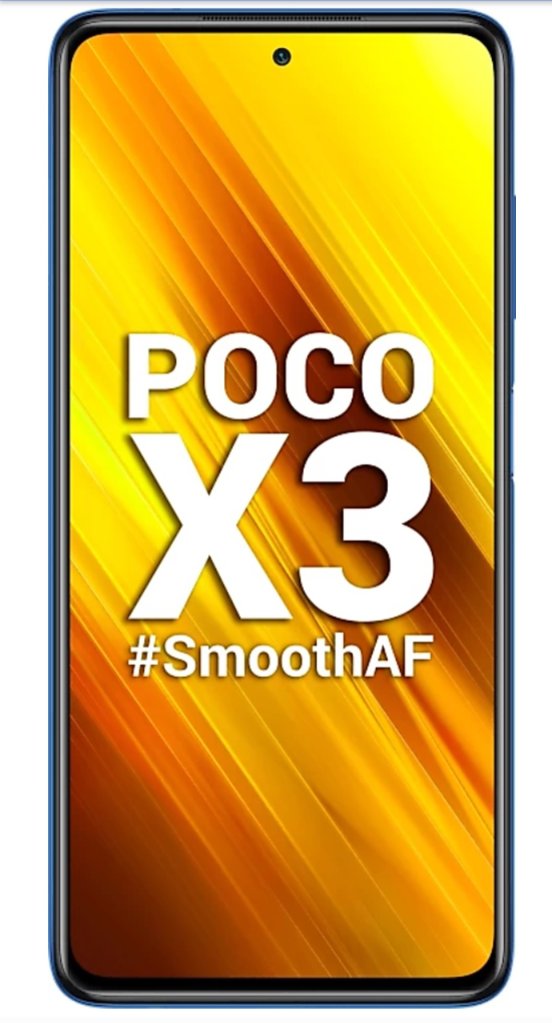
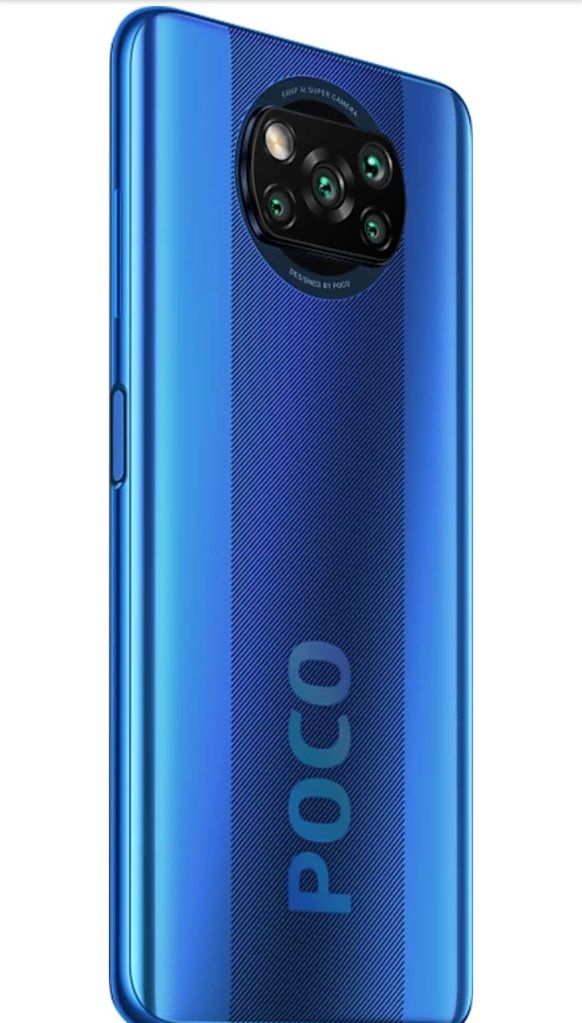
Poco just recently launched new phones in India, but both of them don’t fall under the Poco F series. It seems that those waiting for the successor to the Poco F1 will have to wait a little longer. The company itself has confirmed that it is working to bring a true successor to the phone. While this will take time, the brand has launched Poco X3 to woo its customers. It is a sequel to the Poco X2 and is currently one of the best mid-range phones that you can get in the Rs 20,000 smartphone segment. But, don’t get too excited as every phone has some shortcomings too. Read our Poco X3 review to know more about is this the perfect phone that you have been looking for, or a few shortcomings won’t be an issue for you.
DESIGN, BUILD QUALITY
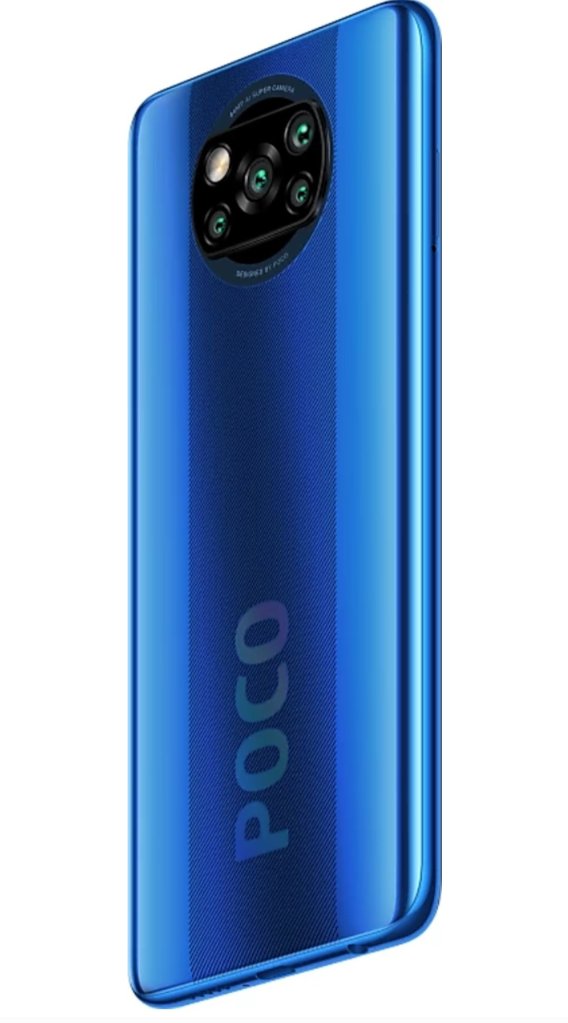
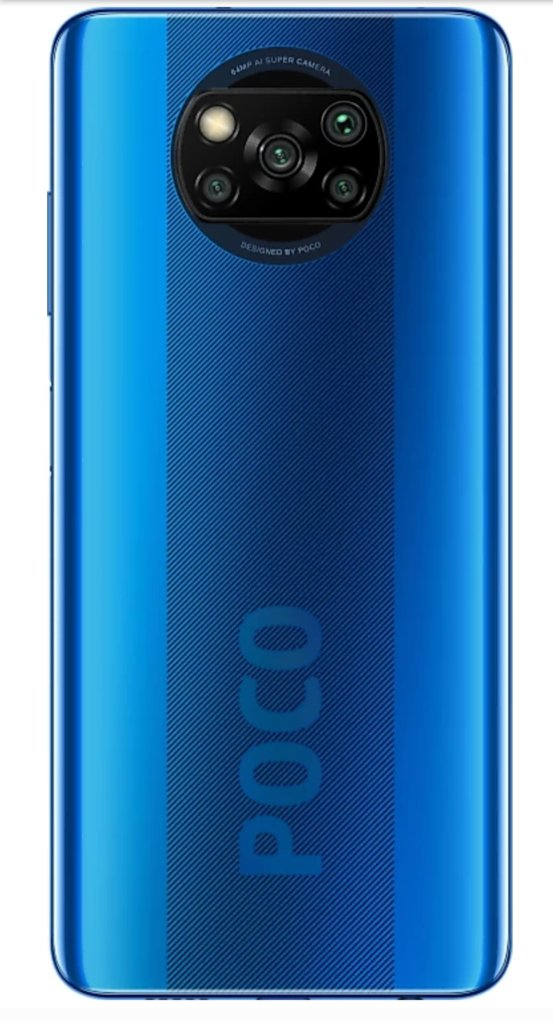
The Poco X2 offered a beautiful design and the same is also the case with its successor. I liked the fact that the company doesn’t just follow the same design blueprint for every phone. A different design not only makes it look unique and refreshing, but also differentiates it from other devices in the market. The dual-textured back and the iridescent light when you look at the phone from different angles, make it look stunning. The device is very well built and one will feel like this is a high-end premium phone and not a budget one. While the X2 features a glass rear panel, the new phone has a plastic build. This is not at all downgrading and the Poco X3 doesn’t have a plasticky feel. Having a plastic back means that you don’t need to worry about it breaking if you accidentally drop it. The company ships a good quality case with the device, so you don’t have to worry about anything. The build quality is great and better than some of the phones in the market. Poco hasn’t compromised in any area. The device even supports an IP53 rating for protection against dust and a few water splashes.The only issue is it feels quite heavy and carrying it around with a case will feel like a burden. But, you will get used to the heaviness after using the device for a few weeks. At the back, note that you get four cameras and not five. At first glance, you will easily be fooled by the back camera design as by just seeing at it you get the impression that there are five sensors. The glossy back panel has a camera bump as well, which is not unusual. If you have any issues, the bundled case will balance it out.
There is a side-mounted fingerprint sensor, which is always a better implementation than having it at the rear. While the position of it is perfect to unlock the phone, it was a bit hard to reach the volume button, which is placed above the power button. Like the Xiaomi phones, here too you get an IR blaster, which is a good addition and could be quite useful to control home devices. When you keep the phone on charge, one will notice a very tiny white LED light on the upper speaker grille.
DISPLAY
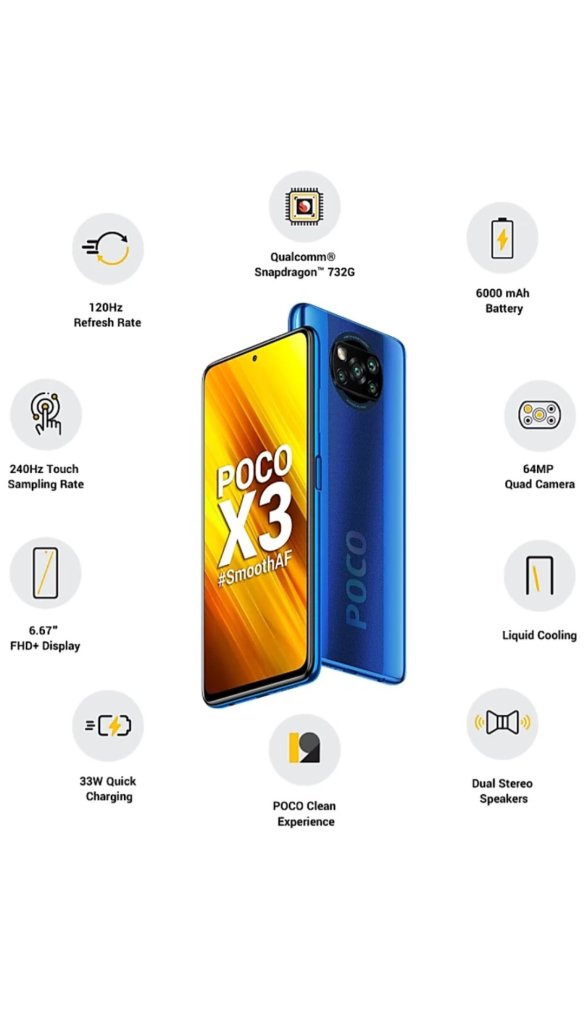
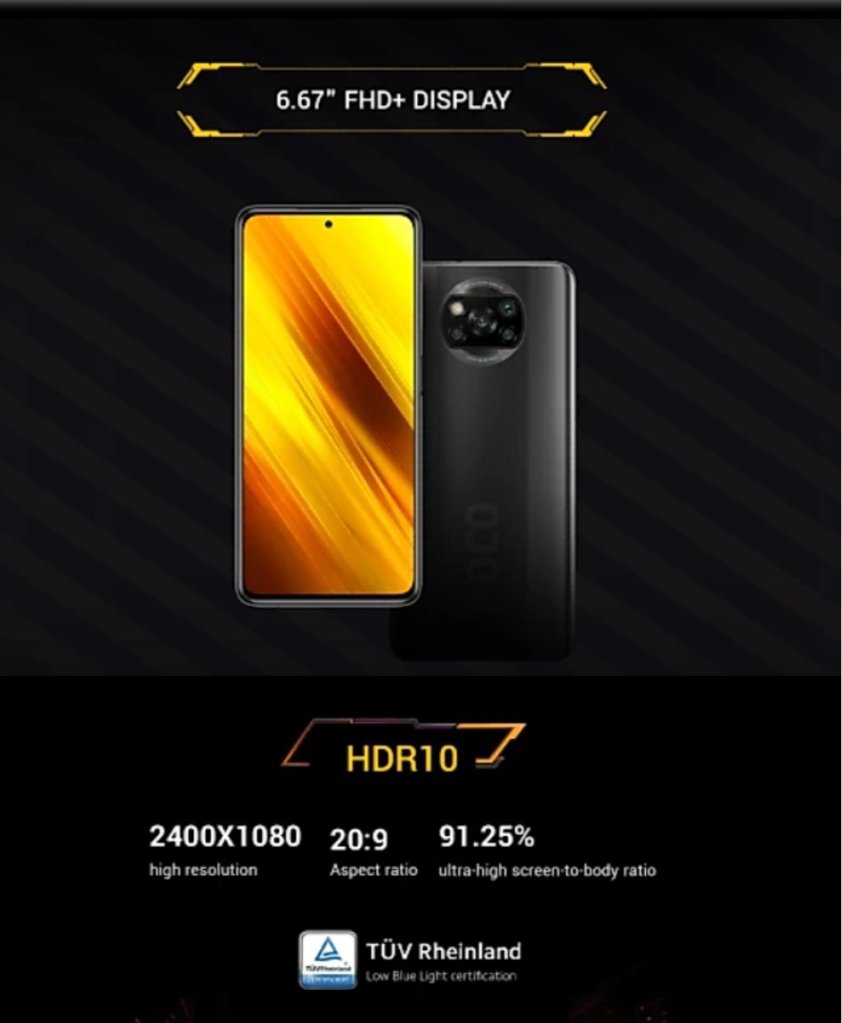
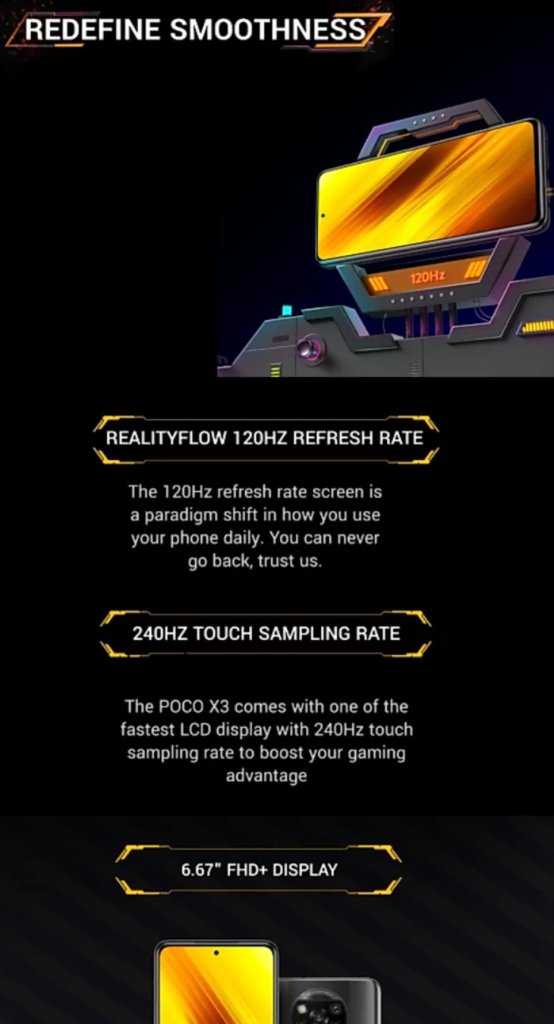
Similar to the Poco X2, you get a big 6.67-inch screen with a tall 20:9 aspect ratio. After reading this, you might have guessed how big the display is. Having a huge screen is great for media consumption, but one-hand usage becomes a little cumbersome. The panel supports 120Hz refresh rate for slightly smoother transitions. One can switch to 60Hz display option to save a certain amount of battery. The screen is vivid and sharp enough. It is visible in harsh sunlight too. The viewing angles are above average, and the panel is protected by Corning Gorilla Glass 5, which is nice. We were using the dark mode, which is not only easy on the eyes, but also helps make the punch-hole cut out unnoticeable. The tiny circular notch is only visible when you open any app without dark mode.
GENERAL PERFORMANCE, SOFTWARE, BATTERY
Moving on, the Poco X3 draws power from Qualcomm’s new Snapdragon 732G chipset. In our usage, we witnessed close to no stutters and lag while using the device as our daily driver. The multitasking on this device is good. Though, you will have to wait for a few seconds when the handset is launching an app for the first time. You can play some casual or heavy titles on the new Poco X3. We tried Call of Duty and Asphalt 9, and witnessed almost zero stutters and the overall gaming experience was fine. After playing the games for 30 minutes, it didn’t get hot which is great. All-in-all, you will mostly get a satisfying experience for the base price.
With the Poco X3, the brand is offering stereo speakers. They sound very loud and are solid for gaming or for watching movies. It is better to keep the volume below 80 for a good listening experience. Additionally, when you push up the volume level to 100 percent and watch a video, the speakers vibrate the phone’s back panel to offer you a much real experience.
The smartphone ships with Android 10 out of the box, instead of Android 11. Phones like Vivo V20 and OnePlus Nord ship with the latest Android OS out of the box. While the user interface is not as optimized as Samsung’s OneUI for one-hand usage, the Poco X3 offered a smooth experience. But, the issue is the device comes pre-installed with a lot of apps. Some of these can be uninstalled, which gives a sense of relief. The problem with having a lot of pre-installed apps is you don’t get full storage space out of the box and some of them even send unnecessary notifications. These include Xiaomi’s “GetApps” app, and a short video-making app called Zili. It is advisable to check the storage section in the settings before buying the base 64GB variant. I would like to mentioned we witnessed no ads in the UI.
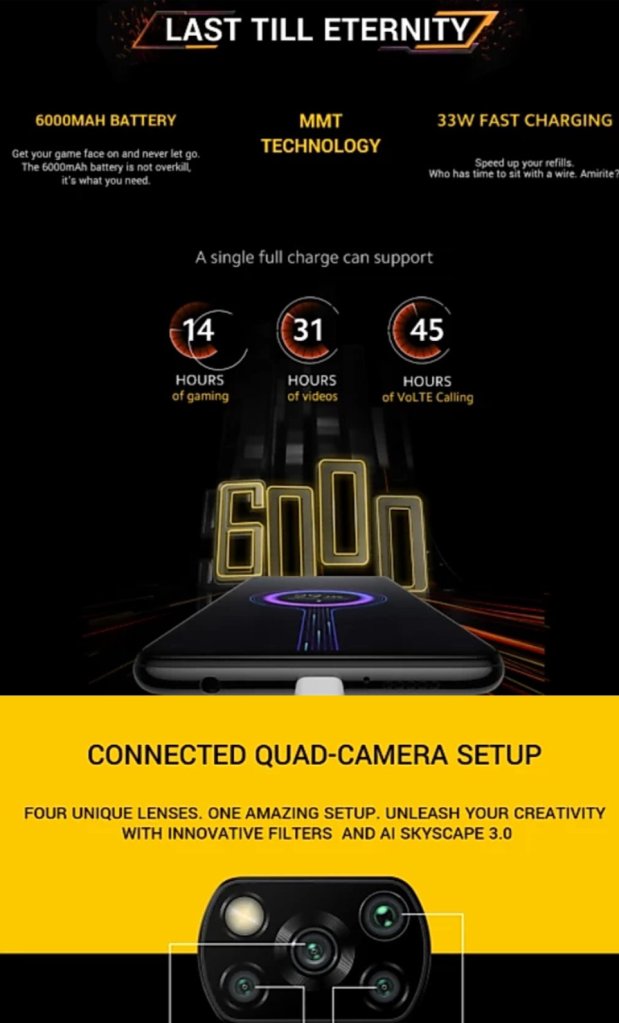
As far as the battery capacity is concerned, the Poco X3 comes with a whopping 6,000mAh battery, similar to Samsung Galaxy M series phones. If your usage is light, then you should easily get around two days of battery life. With heavy usage, do not expect the device to remain alive for more than a day. The company offers a 33W charger, which takes less than two hours to fully charge from zero to 100 percent.
CAMERA
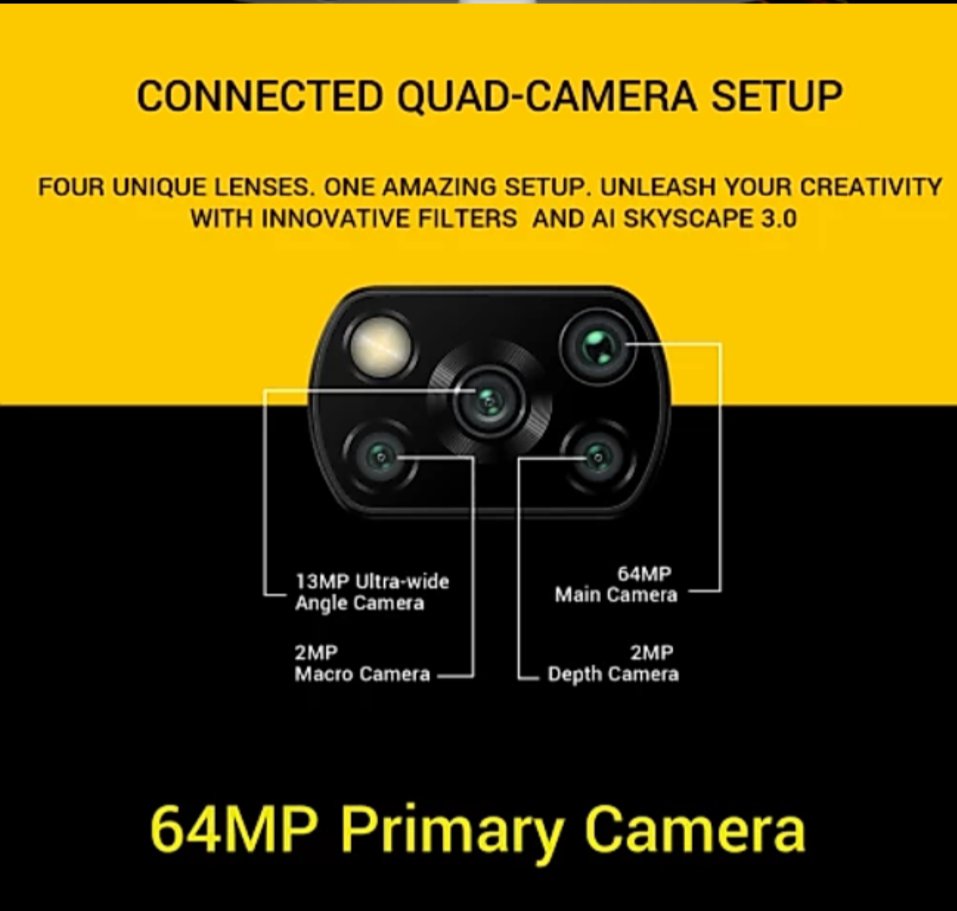
The Poco X3 has a total of five cameras. At the back, you get a 64-megapixel primary Sony IMX682 sensor. One will find the same sensor on the Samsung Galaxy M51, which is priced at Rs 24,999. The setup also includes a 13-megapixel sensor with a 119-degree wide-angle lens, a 2-megapixel depth sensor with an f/2.4 lens, and a 2-megapixel macro shooter. For selfies, there is a 20-megapixel sensor with an f/2.2 lens. Unlike some of the phones, the Poco X3 offers a lot of photography features like long exposure, clone, slow-motion, front and back in one frame, short video, movie frame, Time burst, and more. You also get the usual portrait and night modes. Having an array of options is just great when you are in the mood to have some fun during photography sessions.
However, photos taken with the Poco X3 were a mixed bag. In daylight, some of the photos came out quite well with lively colors. Strangely, we got better photos without 64-megapixel mode. The dynamic range, sharpness, and details are much better with the default camera mode. This could be the reason why Poco has hidden the 64-megapixel camera mode in some other section. With the 64-megapixel mode, the details seem to be a bit lost and some sort of grain is also noticeable when you zoom in the shot. For better shots, you need to turn on both AI and HDR mode, but this is not the case for all the scenarios. It is important to note that you will get good shots as long as there is good natural light.
Also, there isn’t much of a difference between HDR and non-HDR shots. The company has added a Pro Color mode, which works just like Realme’s Croma Boost feature. But, you naturally get vibrant colors, so this will only benefit you when you want the camera to retain more colors.
If you look at the portrait shots in the below album, the Poco X3 did a good job with both human and non-human subjects. We got quite a natural-looking depth of field. I liked the fact that you can adjust the background blur, beauty mode, and even add studio lighting before clicking an image. These options are also available in the Gallery, which is great. The edge detection and details are well preserved, which some of the phones are unable to do that in the Rs 20,000 segment. In one of the portrait shots, the sun is in the background, the device still managed to offer a good enough shot. The camera captured the details, color tone, and sharpness impressively well.
Moving ahead, the wide-angle camera takes average photos, but we got detailed and natural-looking closeup shots. The only thing is the images could have been sharper. I really liked the clone feature. It is fun and very cool. The feature creates and captures virtual clones in a picture. As for the selfies, we feel that the output was not great and the skin tone seemed a little burned. At night, we got much better photos with night mode and above average shots with regular photo mode.
POCO X3: SHOULD YOU BUY IT?
The Poco X3 comes with a starting price of Rs 16,999 in India. It is one of the best phones in India under Rs 20,000. You get a robust build quality, good battery life, and stereo speakers. We do feel the selfie camera is above average, but the rear cameras can offer you some great shots. As per our testing, you won’t have any issues as far as general performance is concerned.
Four Oppo smartphones have got a price cut permanently. These phones are Oppo Reno 3 Pro, Oppo A12, Oppo A15 and Oppo F17. Oppo has reduced the prices of select RAM/storage variants of these smartphones. The Oppo F17 with 8GB RAM and 128GB storage has got a price cut of Rs 500 and it now costs Rs 19,490.
Oppo f17Oppo reno3 proOppo a15
The budget Oppo A15 with 2GB RAM and 32GB storage has got a price cut of Rs 500 and costs Rs 8,990 while the 3GB RAm and 32GB storage option has got a price cut of Rs 1,000 and now costs Rs 9,990.
Another budget smartphone, the Oppo A12 has got a price cut of Rs 500. The 3GB RAM and 32GB storage version of the Oppo A12 now costs Rs 8,990. On the other hand, the Oppo Reno 3 Pro with 8GB RAM and 128GB storage has got a price cut of Rs 1,000 and is now priced at Rs 24,990. The 8GB RAM and 256GB storage variant of the Oppo Reno 3 Pro has been a price drop of Rs 2,000 and is now priced at Rs 27,990.
Oppo a12
Also,Oppo has reduced the price of Oppo A33 in India. The smartphone was launched in October this year with a price tag of Rs 11,990. It has now become cheaper by Rs 1,000 and can be purchased at Rs 10,990 after the price cut. Oppo A33 is offered in two colour variants- Moonlight Black and Mint Cream. The budget category phone boasts of a 90Hz refresh rate display and is powered by Qualcomm Snapdragon 460 octa-core processor.
HINDI TRANSLATION:-
ओप्पो ने इन चार स्मार्टफोन की कीमतों में 2,000 रुपये तक की कटौती की.
चार ओप्पो स्मार्टफोन को स्थायी रूप से कीमत में कटौती मिली है। ये फोन हैं ओप्पो रेनो 3 प्रो, ओप्पो ए 12, ओप्पो ए 15 और ओप्पो एफ 17। ओप्पो ने इन स्मार्टफोन्स के चुनिंदा रैम / स्टोरेज वेरिएंट की कीमतें घटा दी हैं। 8GB रैम और 128GB स्टोरेज वाले Oppo F17 की कीमत में 500 रुपये की कटौती हुई है और इसकी कीमत अब 19,490 रुपये है।
2GB रैम और 32GB स्टोरेज वाले बजट Oppo A15 की कीमत में 500 रुपये की कटौती हुई है और इसकी कीमत 8,990 रुपये है जबकि 3GB RAm और 32GB स्टोरेज विकल्प की कीमत 1,000 रुपये है और अब इसकी कीमत 9,990 रुपये है।
एक अन्य बजट स्मार्टफोन, ओप्पो ए 12 को 500 रुपये की कीमत में कटौती मिली है। ओप्पो ए 12 के 3 जीबी रैम और 32 जीबी स्टोरेज संस्करण की कीमत अब 8,990 रुपये है। दूसरी तरफ, 8 जीबी रैम और 128 जीबी स्टोरेज वाले ओप्पो रेनो 3 प्रो की कीमत में 1,000 रुपये की कटौती हुई है और अब इसकी कीमत 24,990 रुपये है। ओप्पो रेनो 3 प्रो के 8 जीबी रैम और 256 जीबी स्टोरेज वेरिएंट की कीमत में 2,000 रुपये की गिरावट आई है और अब इसकी कीमत 27,990 रुपये है।
ओप्पो ने भारत में ओप्पो A33 की कीमत घटा दी है। स्मार्टफोन को इस साल अक्टूबर में 11,990 रुपये की कीमत के साथ लॉन्च किया गया था। यह अब 1,000 रुपये सस्ता हो गया है और कीमत में कटौती के बाद इसे 10,990 रुपये में खरीदा जा सकता है। ओप्पो A33 को दो कलर वैरिएंट- मूनलाइट ब्लैक और मिंट क्रीम में पेश किया गया है। बजट श्रेणी का फोन 90Hz रिफ्रेश रेट डिस्प्ले का दावा करता है और यह क्वालकॉम स्नैपड्रैगन 460 ऑक्टा-कोर प्रोसेसर द्वारा संचालित है
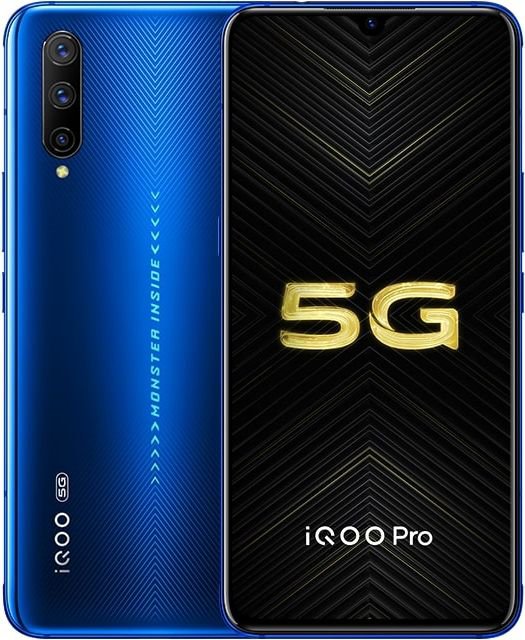
Behind the curtains, 5G may be complicated technology, but all you need to know is that 5G stands for the 5th generation mobile network and it brings with it some advantages that are worth checking out especially if your mobile phone is your primary source of accessing the internet. The first thing you need to know is that your smartphone, the physical handset itself needs to be 5G enabled. So when you purchase the smartphone, look at the specifications of the device to know whether it supports 5G or not. If your smartphone doesn’t support 5G, then you won’t be able to access the 5G network.
While 5G cellular service may be around the corner, you may be wondering what advancements the technology brings and how it will benefit you. Worry not. That’s why we are here and will tell you the advantages 5G brings to your life.
1. Easier transfer/sharing of large files
With faster data transfer speeds comes the ability to share large files without worrying about connecting to the Wi-Fi. So if you have shot a video in 4K on your smartphone and need to upload it to the cloud or simply need to send files that are a few GBs in size, from your phone back to the office over email, you can do so swiftly and without staring at a loading screen thanks to 5G.
2. 5G is a super super faster than 4G
While we may be stating the obvious that 5G is faster than 4G, it is the leap in speed which is actually mind-boggling. 5G promises to deliver speeds around 10 times faster than 4G. This means everything will happen instantly. You no longer need to stare at your screen for minutes while your WhatsApp attachments and videos download. They will happen in seconds. The same for your email attachments.
3. Enabling Cloud gaming
One of the biggest benefits of 5G is the ability to play AAA games on the go. With services like Microsoft’s xCloud and Google’s Stadia one no longer needs a high-end PC or a gaming console to enjoy some of the best games like Forza, Gears, Doom and more. With a 5G connection, players will be able to not only enjoy these games on their smartphone on the go with its highest fidelity but also not face the issue of input lag when gaming on mobile connectivity.
4. Quick movie downloads
Have you ever found yourself at the airport waiting for that movie to download on Netflix or Prime Video so you can watch it on the plane? It’s frustrating when you need to board the flight and the movie hasn’t downloaded, right? Well, with the speed of 5G you will be able to download a 2-hour movie in a matter of seconds, ensuring you have your entertainment with you on the go.
5. Smoother and faster tethering
If you hotspot your mobile internet to use on your laptop on the go or at home to consume OTT content on the TV, then know that 5G will not only ensure a smoother and steady connection but also ensure that content loads a lot faster. So you can expect to stream a movie in 4K on your TV without worrying about buffering or upload/download large files from your laptop on the go using the speed of 5G
POCO M3 processor and battery have officially been confirmed
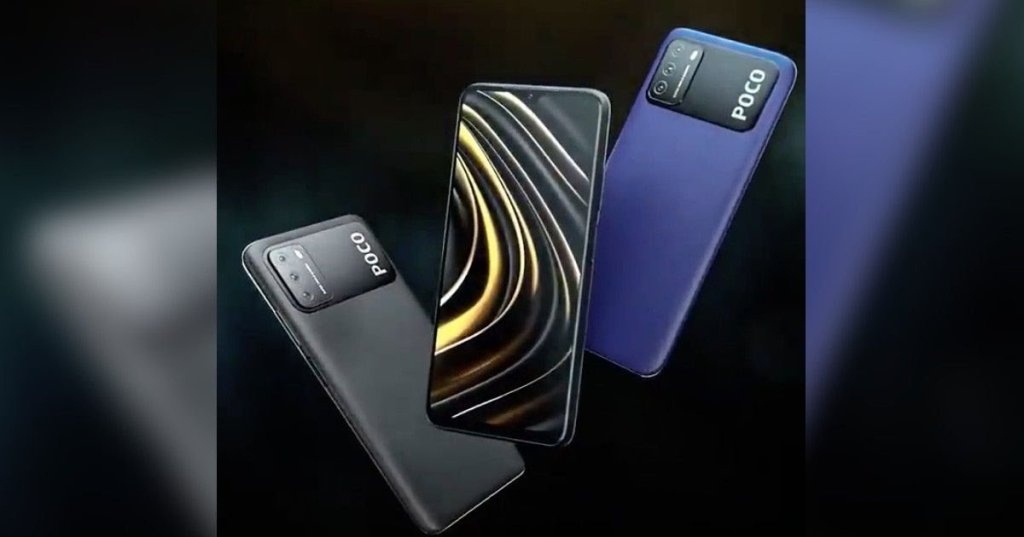
The handset will also come with a waterdrop notch and a unique back design
POCO M3 launch is set for November 24th
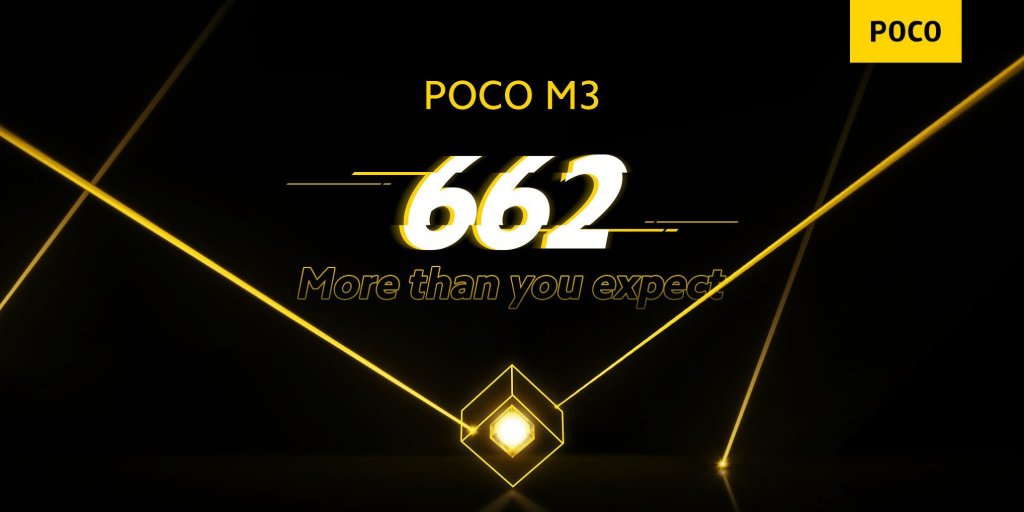
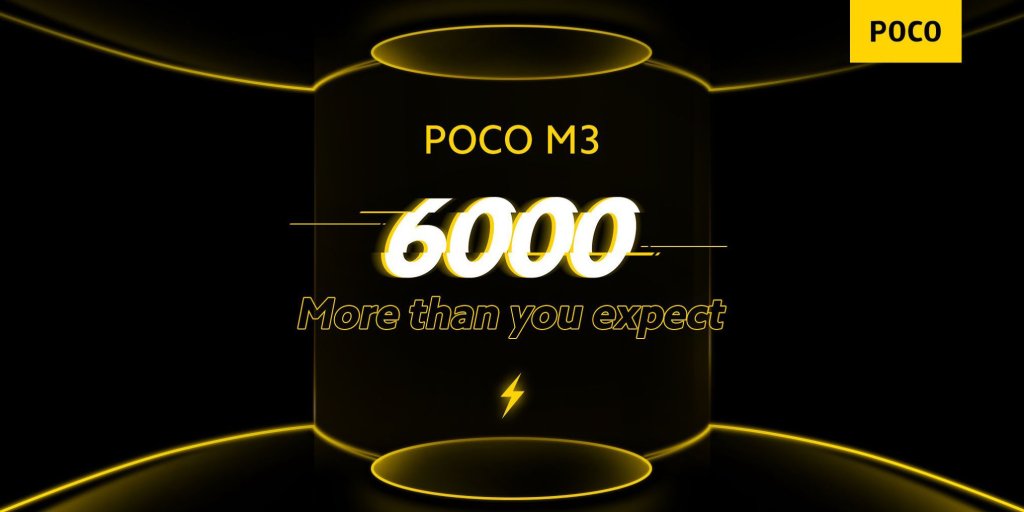
POCO M3 launch is set for November 24th in Europe and we have already heard a lot about the smartphone leaked specifications. Now, the company has taken it upon themselves to officially confirm a few details about the device, including the display, battery, and chipset. POCO M3 specifications include the Snapdragon 662 processor, a large 6,000mAh battery, and a 6.53-inch display. POCO has also revealed the design, which is in line with our render. The smartphone will debut with a waterdrop notch and a textured rear panel with a rather large and unique rectangular block that houses a triple-camera setup with LED flash and POCO branding. All eyes are now on POCO M3 price, which will be announced during the launch event tomorrow.
POCO M3 specifications
POCO M3 SPECS INCLUDE THE SNAPDRAGON 662 PROCESSOR, A LARGE 6,000MAH BATTERY, AND A 6.53-INCH DISPLAY.
POCO M3 will sport a near bezel-less 6.53-inch display with an FHD+ resolution and a waterdrop notch atop for the selfie camera. The Snapdragon 662 SoC under the hood is likely to be paired with at least 4GB RAM, while the 6,000mAh battery will reportedly be backed by 18W fast charging support. Software-wise, the POCO M3 may run Android 10-based MIUI 12 with the POCO Launcher out of the box. In optics, the POCO M3 will employ triple rear cameras, comprising a 48MP primary sensor. Details about the remaining camera sensors and storage options remain a mystery at the moment.
POCO M3 is expected to come in three colour options – black, blue, and yellow. There is no word on the POCO M3 launch in India yet, but the device is expected to release in Asian markets as it has already received the SIRIM certification in Malaysia.
Key Specs
Xiaomi Poco M3
Qualcomm Snapdragon 662 | 4 GBProcessor
6.53 inchesDisplay
48 MP + 5 MP + 2 MPRear camera
8 MPSelfie camera
6000 mAhBattery
Xiaomi Poco M3 Price, Launch Date Expected Price:Rs. 12,999Release Date:24-Nov-2020 (Expected)Variant:4 GB RAM / 64 GB internal storagePhone Status:Upcoming Phone








 sr world tech